The best line of defense is to know what pathogens exist where and in what species. Surveillance, whether routine or in response to aquaculture industry needs, is critical. These data provide the backbone of the Disease Data Mapper.
Surveillance
Active Disease Surveillance –
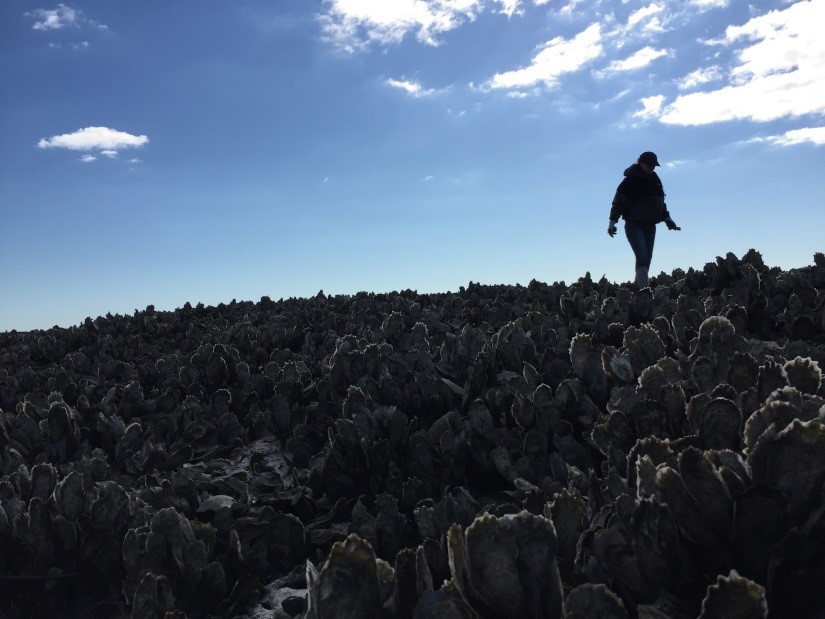
Extensive, systematic monitoring of disease and mortality in natural populations providing critical information to understand changes in disease over time, inform resource management, and look for the emergence of new pathogens. Atlantic Coast Examples:
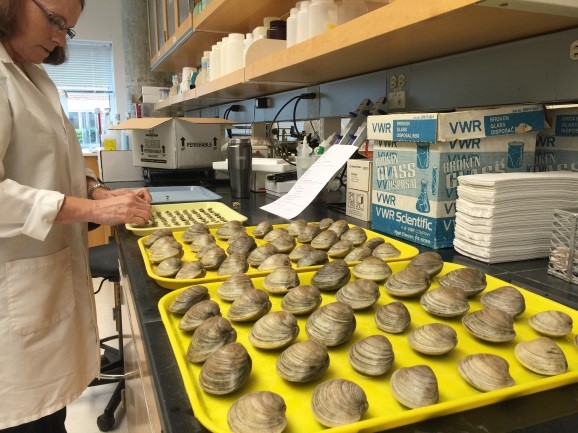
The shellfish samples submitted by growers and hatcheries for evaluation. Whether in response to a die-off event, or for routine seed transfers, this provides critical perspective on disease in aquaculture populations and whether or not new pathogens may be emerging.
Management Strategies for Endemic (common) Diseases
Selective Breeding – fundamental to shellfish health management
Selected oyster lines in wide regional use perform well with regard to MSX, dermo, SSO diseases.
Clam lines in use by Virginia aquaculturists are long-adapted to QPX and resist that disease.
Early Marketing – a potential strategy for Dermo disease management.
Dermo is caused by Perkinsus marinus which is endemic to most of the Atlantic Coast.
Dermo mortality risk increases with time, so marketing before exposure to the pathogen for a second full summer (i.e., at 1.5 yrs of age) is advantageous
Good husbandry – an active role for growers
Minimizing stress that might exacerbate parasitic disease is always important
QPX attacks clams that are stressed, for example, by heavy fouling of nets with macroalgae
Biosecurity Control of Transfers
Promote transfers from “safe” areas, and of smaller seed which is more likely to be free of pathogens
Disease Detection Methods
Health evaluations are the tool used in active and passive surveillance. The nature of the particular situation may require a specific approach, for example a mortality event where an exotic pathogen is suspected would require a rapid and pathogen-specific testing method, whereas a general, catch-all method is standard for a routine health evaluation (refer to the disease detection infographic for a visual comparison of these two methods). Seed transfers often will require a combination of methods and can vary by state based on the importation policy in place.
Histology / Histopathology
Histology is the study of the microscopic anatomy of cells and tissues. It is commonly performed by examining cells and tissues under a light microscope after being sectioned, stained and mounted on a microscope slide. Histology takes several days to complete, however provides a screening tool for multiple pathogens at once as well as assessing overall health. It can also link a pathogen presence to an actual infection.
Ray’s Fluid Thioglycollate Method (RFTM)
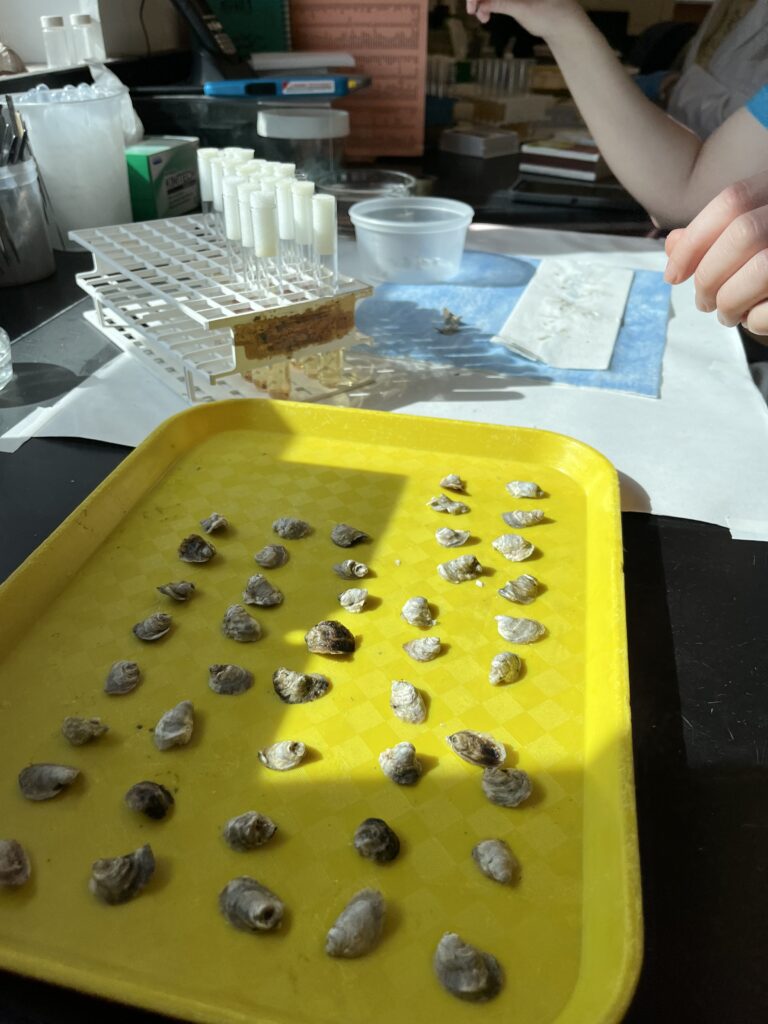
RFTM is for the specific detection of dermo disease agents (Perkinsus spp.). Small pieces of tissue, in larger anumals, or the whole animal, in the case of small seed, are incubated in thioglycollate medium for a week, then chopped on a microscope slide with a drop of Lugol’s iodine. Dermo cells enlarge in the medium and stain with the iodine, turning blue-black for easy microscopic detection. RFTM is more sensitive than histology for detecting light dermo infections in particular, so RFTM data is used routinely to represent dermo levels in stocks proposed for interstate transfer.
Polymerase Chain Reaction (PCR)
Traditional or quantitative PCR assays exist for all major shellfish pathogens, and are very sensitive and specific. DNA is extracted from small pieces of shellfish tissue, and the PCR amplifies the targeted pathogen DNA, if present, to detectable levels. Traditional PCR will determine the presence or absence of the POC in question and qPCR can determine the quantity of target DNA in a given sample.
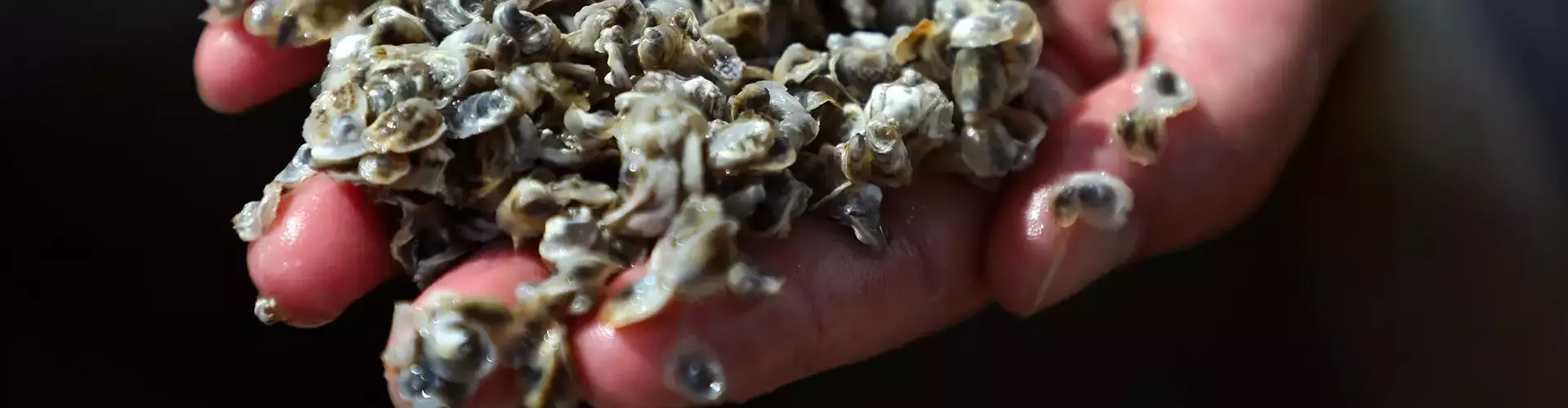
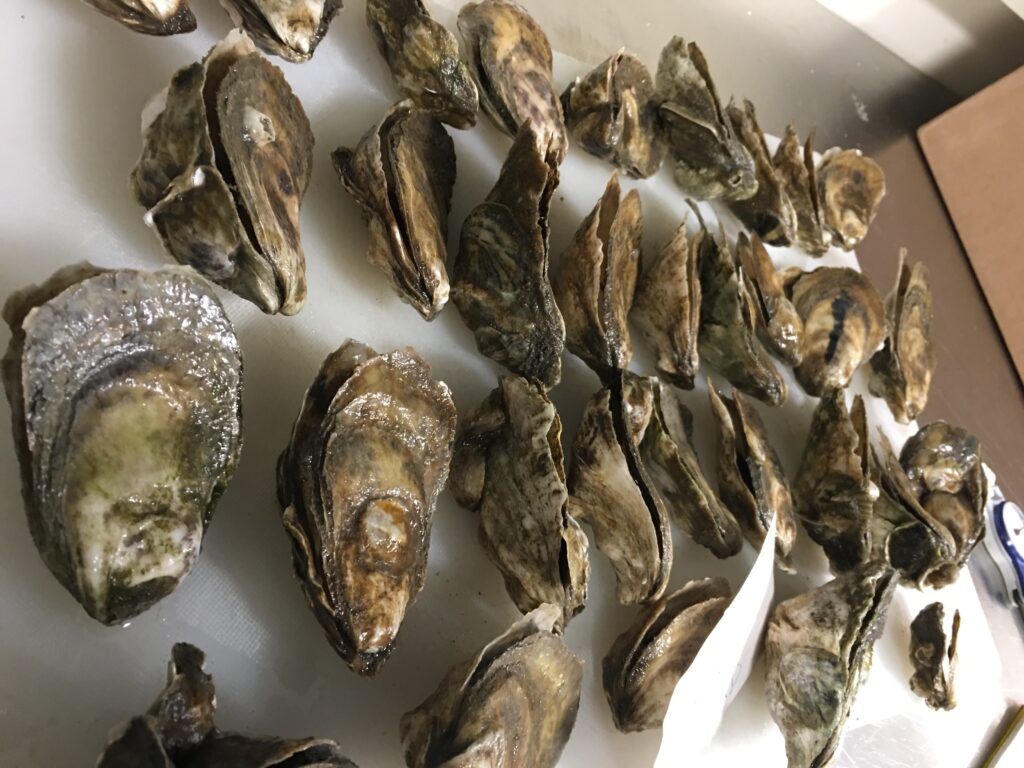
RFTM - Oyster seed being processed
RFTM - Closeup of the tissue in the thioglycollate media.